
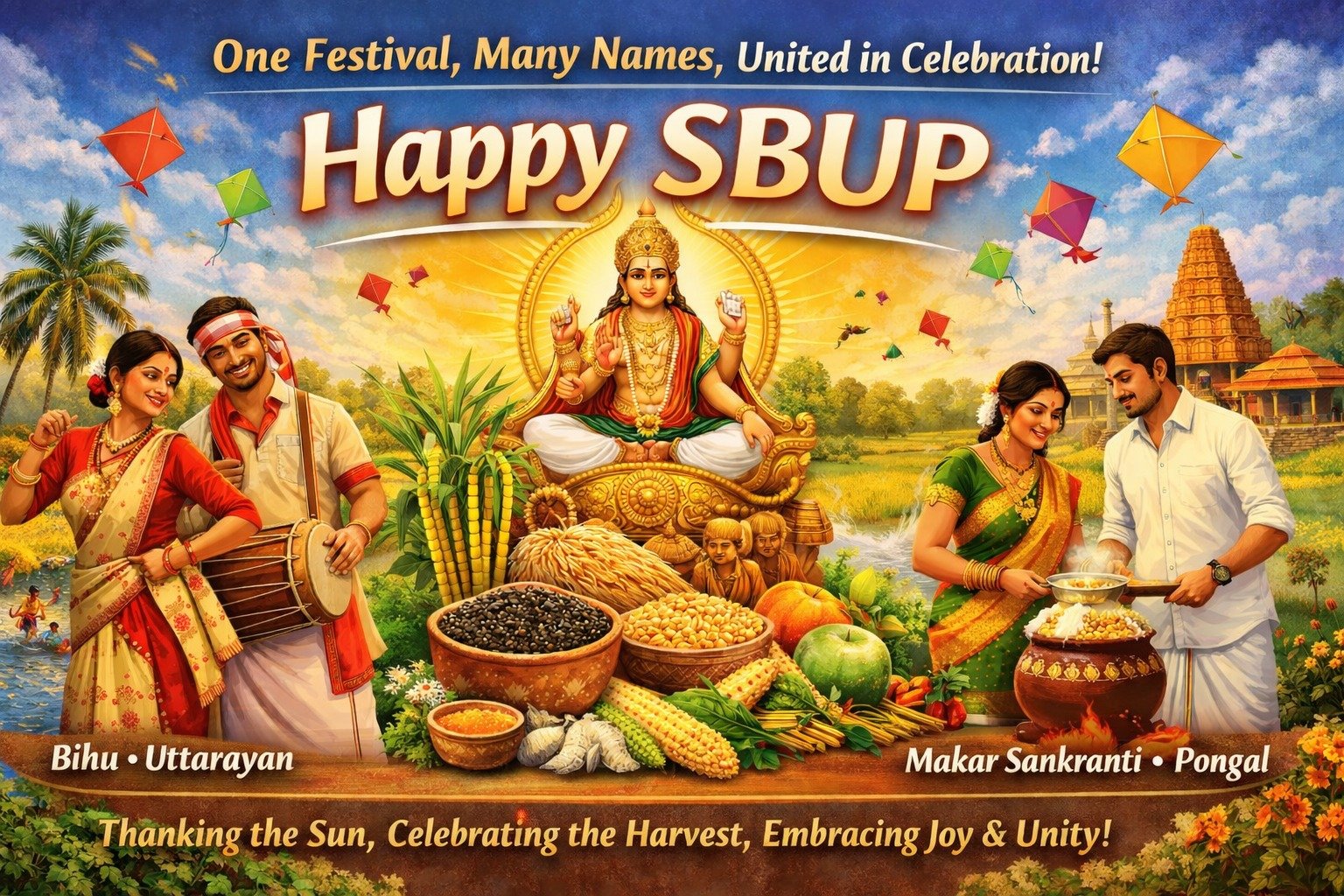
India is a land of vibrant diversity, yet certain festivals beautifully unite the entire nation. One such festival is Makar Sankranti, celebrated under different names and traditions across regions—Bihu in the East, Uttarayan in the West, Makar Sankranti in the North, and Pongal in the South. Despite regional variations, the essence of the festival remains the same: gratitude, renewal, and celebration of nature.
The Significance of Uttarayan: The Sun’s Northward Journey
Makar Sankranti marks the auspicious transition of the Sun into Makara Rashi (Capricorn) and the beginning of Uttarayan, when the Sun starts its northward journey. This movement is considered highly favorable in Indian tradition and symbolizes the onset of a prosperous and positive phase in life.
The festival represents hope, growth, and new beginnings—values deeply rooted in Indian culture and spirituality.
Kites in the Sky: A Symbol of Joy and Freedom
One of the most colorful aspects of the festival, especially in western India, is kite flying. Skies filled with vibrant kites reflect human aspirations soaring high, symbolizing freedom, joy, and the triumph of positivity. It also brings families and communities together in celebration and laughter.
Sacred Baths and Gratitude to Suryadev
On this auspicious day, people take holy dips in sacred rivers such as the Ganga, Yamuna, and Godavari. This ritual signifies spiritual purification, renewal of the soul, and gratitude towards Suryadev (the Sun God)—the ultimate source of energy, warmth, and life on Earth.
The Sun is revered not only for sustaining life but also for guiding agricultural cycles that nourish humanity.
A Festival of Harvest and Thankfulness
Makar Sankranti is deeply connected to agriculture and marks the harvest season, especially for Rabi crops. It is a time to thank nature for its abundance and acknowledge the farmers whose hard work feeds the nation.
Traditional foods made from til (sesame seeds) and sugarcane hold special significance. These ingredients are not only nutritious and healthy but also symbolize warmth, unity, and sweetness in relationships.
Health, Harmony, and Cultural Wisdom
Sesame seeds help keep the body warm during winter and are rich in nutrients, while sugarcane provides natural energy and vitality. Together, they reflect India’s ancient wisdom of aligning food habits with seasonal needs.
One Nation, One Spirit
Though celebrated differently across regions, Makar Sankranti beautifully reminds us that India’s diversity is its strength. One festival, many names—but a shared spirit of joy, gratitude, and togetherness.
“Happy UPSB”
— Manisha Upadhyay
No comments yet. Be the first to share your thoughts.